Historical Timeline





The Muwekma Ohlone Tribe of the San Francisco Bay Region:
A Brief Historic Timeline from 1900 to Present
with Selected Evidence for Previous and Continued Federal Recognition
and Other Key Historic Documents
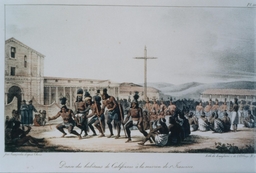
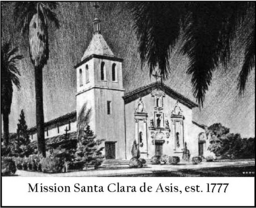
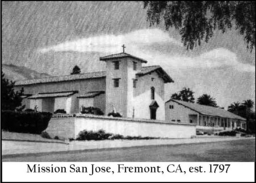
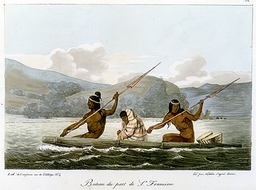
- 1776-1849 - Muwekma ancestors baptized at Missions San Francisco, Santa Clara and San Jose.
- 1797-1930 - Muwekma Ohlone ancestors and families continue to be baptized at Mission San Jose, buried in the Ohlone Cemetery, and some children were placed in the St. Joseph’s Orphanage during the late 19th and early 20th centuries.
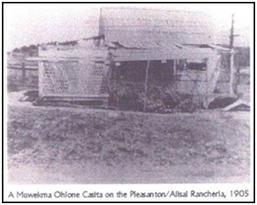
- 1879/80 - US Senator George Hearst and his wife Phoebe Apperson Hearst purchase part of Muwekma’s Alisal (Pleasanton) Rancheria where they built their mansion Hacienda del Pozo de Verona. Western Pacific Railroad builds a spur to their land and named the train stop Verona Station.
- 1900 – Two Federal Censuses - Direct ancestors of the Muwekma Ohlone enrolled membership were identified as Mission San Jose Indians or Costanoan on the 1900 Indian Population Schedules for Washington Township (Niles Rancheria) and Murray Township (Pleasanton and Sunol Rancheria).
- 1904 - The Northern Association for California Indians in their petition and memorial to Congress and President Roosevelt identified the two ancestral Muwekma tribal communities located at Pleasanton and Niles as “Costanoan” tribal groups.
- 1905-1906 Special Indian Census - Direct ancestors of the presently enrolled Muwekma Ohlone Tribal membership were identified by Charles E. Kelsey, Special Indian Agent for California on the Special Indian Census residing at Niles and Pleasanton, Alameda County.
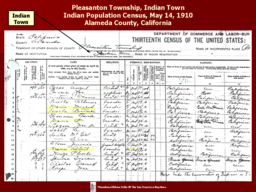
- 1910 Federal Census - Direct ancestors of the Muwekma Ohlone membership were identified living on the 1910 Indian Population Schedule for Pleasanton Township residing at “Indian Town” (Alisal Rancheria).
- July 1, 1910 - Special Indian Agent C. E. Kelsey completed an official map for the Indian Service Bureau identifying all of the extant California Indian Rancherias under BIA jurisdiction and eligible for homesite land purchases under the Congressional Appropriation Acts of 1906, 1908, and later years. This map is dated July 1, 1910 and signed by Agent Kelsey. Kelsey formally designated the combined Niles/Sunol/Pleasanton/Livermore ancestral Muwekma communities as the Verona Band which takes its name after the Indian settlement that was located on the Hearst property and adjacent Verona railroad station that was built for them.
- 1911-1913 - Special Indian Agent C. E. Kelsey published a map in 1911 and again in 1913 for the Indian Service Bureau and concerned Congressmen identifying all of the extant California Indian Rancherias under BIA jurisdiction and eligible for homesite land purchases. Kelsey formally designated the combined Niles/Sunol/Pleasanton/Livermore ancestral Muwekma communities the Verona Band. 2
- 10. December 7, 1914 - Special Indian Agent from the Reno Agency, C. H. Asbury, took over Kelsey’s responsibilities for Northern California and identified the Verona Band in 1914 correspondence as one of the tribes eligible for homesite land purchases under the Congressional Appropriation acts of 1906, 1908 and later years. “Referring to the above letter of September 10th, regarding use of the appropriation for the purchase of lands for the Indians in California, I have made some investigation of this… . In this connection, I called on Mr. Kelsey for such data… . The list is given to me by Mr. Kelsey, and which is probably approximately right is as follows: Verona 30” (Asbury Reno Agency Report 1914:2).
- 1923 - Reno Agency Annual Report, Superintendent James Jenkins reported to the Commission that “Other Indians in California under this jurisdiction but not occupying Government Lands are found in the localities named below: … Alameda (County) Verona 30.” (1923:4-5).
- June 23, 1927 Sacramento Agency Report Superintendent L. A. Dorrington reported to Assistant Commissioner, E. B. Meritt that:
“…There is one band in Alameda County commonly known as the Verona Band, which consists of about thirty individuals, located neat the town of Verona; these Indians were formerly those that resided in close proximity of the Mission San Jose.” (1927:1) - 1928 California Indian Jurisdictional Act Approved BIA Enrollment Applications - Between 1929 and 1932 direct ancestors and families of the Muwekma Ohlone Tribe enroll under the 1928 California Indian Jurisdictional Act completing 18 applications containing the names of 55 members of the tribe. All of the enrollment Muwekma families identified as Mission San Jose Tribe or Ohlone (or variation thereof). Note none of the other 17,000 California Indians were identified as “Tribe: Mission San Jose.”
- 1931-1940 - Sherman Institute BIA Boarding School. Muwekma ancestor Domingo Marine enrolled at the Sherman Institute in Riverside California.
- 1944-1947 - Chemawa BIA Boarding School. Muwekma tribal members John Guzman and Reyna Guzman were enrolled at the Chemawa Indian Boarding School in Oregon.
- 1948-1957 - Second BIA Enrollment. Between 1948 and 1957 at least 21 Muwekma Ohlone heads of households enroll and are approved by the Secretary of the Interior.
- 1953 Bureau of Indian Affairs, Sacramento Approved BIA Roll
“Note: this list is divided into three alphabetical sections: (1) The 1933 Roll; (2) Part II of the 1933 Roll (Supplemental) and (3) The Roll approved November 23, 1951.”
Roll No.-
106Alaniz, Phoebe, “Tribe Mission San Jose”;
-
150Aleas, Joseph Francis, “Tribe Mission San Jose”;
-
381Alvarez, Jennie, “Tribe Mission San Jose”;
-
456Andrade, Chona, “Tribe unknown, Alameda County”;
-
715, 716Arrellano, Albert, Arrellano, Edwina, “Tribe Mission San Jose”;
-
1586Bianoco, Jose, “Tribe Mission San Jose”;
-
3955, 3956, 3957,Corral, Erolinda Corral, Arthur, Corral, Robert, “Tribe Mission San Jose”;
-
107Garcia, Thomas, “Tribe Mission San Jose”;
-
6905Gonzales, Eulario, “Tribe Mission San Jose”;
-
7459Guzman, Jack, “Tribe Mission San Jose”;
-
11904Marine, Josephine, “Tribe Mission San Jose”;
-
11909, 11910Marine, Catherine, Marine, Ernest, “Tribe Mission San Jose”;
-
12004, 12005Martel, Flora Thompson, Martel, Laura May, “Tribe Mission San Jose”;
-
16248Redondo, Joseph, “Tribe Mission San Jose”;
-
17269, 17270, 17271, 17272, 17273Sanchez, Dolores, Sanchez, Augusta, Sanchez, Morgan, Sanchez, Maggie, Sanchez, Ignacio, “Tribe Mission San Jose”;
-
9859Santos, Daniel, “Tribe Mission San Jose”;
-
19492Thompson, Eduardo (Edward) “Tribe Alameda County.”
-
- 1954-1955 - Alfred L. Kroeber and R. F. Heizer’s “Continuity of Indian Population in California from 1770/1848 to 1955”
Kroeber and Heizer’s historic study was prepared as in connection with the California Indian Claims Case. These two anthropological authorities from U. C. Berkeley presented documentation that recognized the survivorship of Indian “Groups” in the 20th century and specifically “Groups which anthropologists had long since given up as unproductive and culturally extinct, were evidently still going strong racially” (1970:3).
Kroeber and Heizer testified before the Justice Department at San Francisco stating that:
“Two main principles were followed in the selection of this sample:
1) Concentration on supposedly vanished, obscure, neglected, or “denatured” Indian groups, such as anthropologists tended to regard as unproductive for their purposes. This would include the little tribes that had suffered most heavily from gold miners and others; and the long Catholicized Indians of the Franciscan Missions, who, since secularization in 1834, might have tended not so much to die out as to socially merge in the resident Mexican population.
… These 491 genealogies from small, obscure, missionized, forgotten, or presumably “extinct” groups are tabulated in Part B of this report.
PART B. SPECIFIC DATA San Jose Mission In. S. Alameda Co.
Later refuge: Pleasanton RECAPITULATION OF 1955 INQUIRY INTO SURVIVORSHIP Costano Missions San Jose (Pleasanton) 12 …” - July 23, 1966 Letter to Congressman Don Edwards from Rupert Costo, American Indian
Historical Society and Philip Galvan
Enclosed please find a statement of the Ohlone Indians as to their history and present status, copy of the deed to the present official Ohlone Indian Cemetery. We request that you sponsor legislation designating the.98 of an acre adjacent to the Ohlone Indian Cemetery and the cemetery itself as a national historic site. A provision that the Government place this area in the care of the Ohlone Indians and the American Indian Historical Society… . - 1971 - Third BIA Enrollment. Between 1969-1971 at least 19 Muwekma Ohlone heads of households enroll and are approved by the Secretary of the Interior.
- May 1974 State of California Department of Parks and Recreation Historic Resources Inventory Ohlone Indian Cemetery
“Ohlone Indian Cemetery
Washington Blvd. App. 1 mile west of Mission San Jose
Owner: Ohlone Indian Tribe City: Mission San Jose
1. Fremont Historical Places E27
2. National Register of Historic Places Rec’d 1/25/1971
Event of Historical Importance:
Local _X_ State _X_ National _X_
“Ancient burial place for Ohlone Indians and for Indians of Mission San Jose.”
Person of historical importance:
Name: “Tribal chiefs”
Statement of Significance:
“Prehistoric and historic burials are contained in this site. Burial ground includes baptized Indians associated with the Mission San Jose.” - January 1982 Committee to Establish the Tribal Council of the Costanoan Indians
Proposed Articles for Incorporating
“Committee to Establish the Tribal Council of Costanoan Indians
Alex O. Ramirez, Chairman
Manuel Martinez, Vice-Chairman
Rosemary Cambra, Sec./Tres.
Article I Name
The name of this organization shall be COSTANOAN (OHLONE) TRIBAL COUNCIL.
Article II Objectives
The objective of The Council shall be to create and maintain a cooperative working relationship between the Costanoan Indians, referred to also as Ohlones.
1. … Becoming aware of government, state and county resources available to Indians and their families.
2. Serve as a resource to the community.
The Council shall be an advising, coordinating and evaluating agency in order to protect, conserve, and gain added cultural knowledge for the benefit of the people it represents.
Article III OFFICERS Section I Composition of tribal Council
The Tribal Council members shall consist of Costanoan Indians with application and folder numbers registered with the United States Dept. of Interior Bureau of Indian Affairs. - Muwekma Ohlone Leadership are placed on the Native American Heritage Commission’s Most Likely Descendant List which included former Muwekma Chairwoman Rosemary Cambra.
- September 21, 1982 Letter from Karen Parsons East Bay Regional Park District to Nancy Evans Native American Heritage Commission
“Ardenwood Regional Preserve Native American Input concerning Ohlone Village and Burial Site Ala-392
“Thank you for returning my call last Friday to advise the District on Native
American input for the Land Use-Development Plan. As we have discussed, the District will be sure to involve California Native Americans and will contact:
Phil Galvan (Fremont)
Rosemary Cambra (San Jose) Ohlone Tribal Council
Jenny Mitchell (Union City) Tri-City Native Americans.” - March 1989 - Resolution of Intent to Petition (#111) Muwekma Ohlone Tribal Council petitions the United States Government for Recognition.
- April 25, 1989, Letter from the DOI, BIA Tribal Government Services to Chairwoman Rosemary Cambra acknowledging receipt of the Tribe’s letter with the “intent of the Ohlone/Costanoan – Muwekma Tribe to present a petition for Federal acknowledgment as an
Indian Tribe.” The Acting Chief of Tribal Services, also clearly stated that:
“Acknowledgment of a petitioning group as an Indian tribe within the meaning of Federal law establishes a permanent special relationship with the United States.
… Because of the significance and permanence of acknowledgment as a tribe, the process of evaluation is a lengthy and thorough one.” [Emphasis added] - June 16, 1989, Letter from the BIA’s Acting Deputy to the Assistant Secretary - Indian Affairs Operations, Hazel E. Elbert to Chairwoman Rosemary Cambra stating:
“This letter is to acknowledge our receipt, on May 9, 1989, of the undocumented petition for Federal acknowledgment of the Ohlone/Costanoan Muwekma.
… The evaluation process is deliberately lengthy and painstaking because the decision to acknowledge an Indian tribe establishes a perpetual government-togovernment relationship with the United States.” …[Emphasis added] - 1989-1992 – Muwekma successfully repatriates 550 ancestral remains from Stanford University aided by the Native American Heritage Commission’s Executive Secretary Larry Meyers.
- April 6, 1992 – Resolution by the International Treaty Council Recognizing and supporting the Muwekma Ohlone Tribe.
- June 27, 1992 – TAMIEN CALTRAIN STATION Grand Opening . “Dedicated to the Muwekma Ohlone Tribe of the Ohlone Indian Community who have lived on this site for centuries.”
- September 10, 1992 - Resolution San Francisco Human Rights Commission Recognizing the Muwekma Ohlone Tribe of the San Franicsco Bay Area.
- 1994 - The Site of Tamien an Ohlone Indian Village. History Walk Historical Marker Downtown San Jose, California. “ … Today the Muwekma Ohlone Tribe is the successor to the aboriginal people who inhabited this valley.” https://grpg.org/public-art-landmarks/
- May 13, 1994 - The City of San Jose unveiled the public art displaying Eagle, Coyote and Hummingbird and a version of the Ohlone Creation Narrative honoring the Muwekma Ohlone Tribe and later immigrants to San Jose, California with a plaque and sculptures.
- 1994 Passage of HR 4180) “An Act to provide for the annual publication of a list of
federally recognized Indian tribes, and for other purposes.)
“Title I – Withdrawal of Acknowledgment or Recognition.
SEC. 101 Short Title. “Federally Recognized Indian Tribe List of 1994.” …. SEC 103 Findings …
(3) Indian tribes presently may be recognized by Act of Congress; by the administrative procedures set forth in part 83 of the Code of Federal Regulations denominated “Procedures for Establishing that an American Indian Group Exists as an Indian Tribe; or by decision of a United States court;
(4) a tribe which has been recognized in one of these manners may not be terminated except by an Act of Congress;
(5) Congress has expressly repudiated the policy of terminating recognized Indian tribes, and has actively sought to restore recognition to tribes that previously have been terminated; … [Emphasis added]
Title II Central Council of Tlingit and Haida Indian Tribes of Alaska …SEC. 202. Findings
The Congress finds and declares that—
(1) the Secretary does not have the authority to terminate the federally recognized status of an Indian Tribe as determined by Congress;
(2) the Secretary may not administratively diminish the privileges and immunities of federally recognized Indian tribes without the consent of Congress; …” [Emphasis added] - 1996 - Muwekma Ohlone Tribal Mural in the City of Berkeley in News for Native California: Abundance, Happiness, Pride and Hope (Volume 9, No. 3, Spring 1996).
- May 24, 1996, Letter of Previous Federal Recognition from Deborah Maddox, Division Chief of Tribal Operation to Chairwoman Rosemary Cambra stating:
Based upon the documentation provided, and the BIA’s background study on Federal acknowledgment in California between 1887 and 1933, we have concluded on a preliminary basis that the Pleasanton or Verona Band of Alameda County was previously acknowledged between 1914 and 1927. The band was among the groups, identified as bands, under the jurisdiction of the Indian agency at Sacramento, California. The agency dealt with the Verona Band as a group and identified it as a distinct social and political entity. The band was among the bands proposed by a Special California Indian agent in 1914 for homesite land under the appropriations for homeless California Indians which began in 1906.” - November 1996 Bureau Of Indian Affairs’ Branch of Acknowledgement and Research produced a “Working Paper on Previous Acknowledgment in California, 1887-1933” that clearly determined that:
When this detailed research was done, government researchers uncovered substantial evidence of previous acknowledgment of nonreservation California groups which are not presently recognized. Federal actions toward California Indians between 1906 and 1933 show that many tribes not currently recognized were then acknowledged. This report analyzes several types of Federal actions during this period and finds that some previous actions constituted recognition and some did not. (1996:1-3) - January 23, 1998 – Letter from BIA Sacramento Acting Area Director Michael R. Smith to Dena Magdaleno, Chairwoman of the Congressional created (HR 2144) Advisory Council on California Indian Policy’ Recognition Task Force concluded his letter by stating:
… The Bureau of Indian Affairs, Sacramento Area Office, is ready to assist the Tsnungwe Council and the Muwekma Ohlone Tribe in seeking administrative Federal recognition on the basis your tribes were never terminated. - January 27, 1998 – Letter from BIA Sacramento Area Director Ron Jaeger to Chairwoman Rosemary Cambra, concluded his letter by stating:
… Based on a preliminary conclusion by the Central Office, BIA, that the Muwekma Ohlone Tribe has met the requirements of 25 CFR 83.8, the Sacramento Area Office hereby supports the Tribe in its efforts to obtain Federal recognition status. This office is willing to support the Tribe’s efforts by providing assistance whenever possible.” - September 1997/1998 Advisory Council on California Indian Policy Recognition Report – Equal Justice for California submitted to the US Congress formally concluded the following about Sacramento Agency Superintendent Lafayette A. Dorrington’s actions:
The Dorrington report provides evidence of previous federal acknowledgment for modern-day petitioners who can establish their connection to the historic bands identified therein. Clearly, the BIA “recognized” its trust obligations to these Indian bands when it undertook – pursuant to the authority of the Homeless California Indian Acts and the Allotment Act –to determine their living conditions and their need for land. The fact that some were provided with land and others were not did not diminish that trust.
Among those California Indian groups that have petitioned for federal acknowledgment, there are several who can trace their origins to one or more of the bands identified in the Dorrington report. The Muwekma Tribe is one whose connection to the Verona Band (id, at 1) has been recently confirmed in a letter from the BAR, … . - March 26, 1998 Letter from Division Chief of Tribal Operation, Deborah Maddox to Chairwoman Rosemary Cambra stating that:
A review of the Muwekma submissions shows that there is sufficient evidence to review the petition on all seven of the mandatory criteria. The Bureau of Indian Affairs (BIA) is placing the Muwekma petition on the ready for active consideration list as of March 26, 1998. - 2000 (Draft Recognition Bill)Congressman George Miller
(Title II- California Tribal Status Clarification Act) SEC.201. SHORT TITLE
“California Tribal Status Clarification Act of 2000”
SEC.202. FINDINGS
The Congress finds the following:
…. (4) The Muwekma are the descendants of the native peoples who occupied the southern, eastern and western regions of the San Francisco Bay Area, including all of what is now San Francisco, San Mateo, Alameda and Contra Costa Counties, much of what is now Santa Clara County, and parts of Santa Cruz, san Joaquin, Napa and Solano Counties. The aboriginal tribes from which the Muwekma are descendants include the Passasimi/Yatikumne, Tamcan, Josemite, Lacquisemne, Julpun, Napian/Karkin, Jalquin/Yrgin, Alson/Tamien, Suenen, Chupcan, Choquoime and Nototomne. Spanish missionaries forced the ancestors of the Muwekma Tribe into the Mission Dolores, San Jose and Santa Clara in the late 18th and early 19th centuries. In the 1830’s the Mexican government secularized the missions which resulted in the exclusion of the Muwekma from the three Bay Area missions and their resettlement in a number of rancherias in the Alameda County, including the Alisal Rancheria near Pleasanton, the Del Mocho Rancheria near Livermore, the El Molino Rancheria near Niles, as well as on rancherias in Sunol and San Leandro/ San Lorenzo. The Muwekma people continue to reside in their aboriginal territory in the San Francisco Bay Area.
(5) The United States recognized all four tribes in the early part of the century as politically identifiable bands of Indians under its jurisdiction and eligible for statutory benefits and services. The Koi people were recognized as the Lower Lake Band, The Tsnungwe as the Trinity Tribe of Humboldt County and the Burnt Ranch, the Muwekma as the Verona Band of Alameda County, and the Dunlap as the Dunlap Band of Monos.
(6) The United States recognized the four tribes as eligible for the purchase of lands under the provisions of various Appropriations Acts allocating funds to purchase lands for homeless Indians in California. While the BIA recognized the Muwekma, Tsnungwe and Dunlap as tribes eligible for the purchase of land under these Acts, no land ever was purchased for them. ….
… (8) Congress has never terminated or expressed intent to terminate the status of the Lower Lake Koi Tribe, the Muwekma Tribe, the Tsnungwe Council or the Dunlap Band. Nevertheless, the Bureau of Indian affairs has refused to deal with the Tribes as federally recognized tribes. Notwithstanding the denial of federal benefits, services and protection, the Tribes have continued to maintain social and political ties from since the dates of last recognition by the Bureau. - 2000 –D.C. District Court Justice Ricardo Urbina wrote in his Introduction of his Memorandum Opinion Granting the Plaintiff’s Motion to Amend the Court’s Order (July 28, 2000) and Memorandum Order Denying the Defendants’ to Alter or Amend the Court’s Orders (June 11, 2002) that:
The Muwekma Tribe is a tribe of Ohlone Indians indigenous to the present-day San Francisco Bay area. In the early part of the Twentieth Century, the Department of the Interior (“DOI”) recognized the Muwekma tribe as an Indian tribe under the jurisdiction of the United States.” (Civil Case No. 99-3261 RMU D.D.C.) - October 30, 2000, Response by the Department of Interior’s Branch of Acknowledgment and Research/Tribal Services Division of the Bureau of Indian Affairs to Justice Urbina’s Court Order regarding the Muwekma Ohlone Tribal enrollment and descendency:
… . When combined with the members who have both types of ancestors), 100% of the membership is represented. Thus, analysis shows that the petition’s membership can trace (and, based on a sampling, can document) its various lineages back to individuals or to one or more siblings of individuals appearing on the 1900, “Kelsey”, and 1910 census enumerations described above. - January 5, 2001, Department of Interior, Division of Indian Affairs and the Environment and Natural Resources Division, United States Department of Justice lawyers complaining to U. S. District Justice Ricardo Urbina in their “Response to the Court’s Two
Questions Concerning the Relief Plaintiff Requests” argued the following:
Plaintiff’s assertion that it was inadvertently dropped from the list of Federally recognized tribes, and, therefore, it is entitled to priority over other petitioners is also baseless. There is no evidence that the Muwekma Tribe was “illegally” or “inadvertently” removed from recognized status, as Plaintiff insists. Instead, it appears that the relationship between the Federal government and the Verona Band, to which the Plaintiff now claims to be the successor, simply withered away after the 1920’s for reasons yet to be determined by the BIA. (No. 1.99CV03261 (RMU) January 5, 2001, pg. 4-5). [Emphasis added] - November 2001: GAO Report to Congressional Requesters – Indian Issues – Improvement Needed in Tribal Recognition Process concluded that:
Although the regulation-based process was never intended to be the only way groups could receive federal recognition, it was intended to provide clear, uniform, and objective approach for the Department of the Interior that established specific criteria and a process for evaluating groups seeking federal recognition. …. However, weaknesses in the process create uncertainty about the basis for recognition decisions, and the amount of time it takes to make those decisions impede the process from fulfilling its promise as a uniform approach to tribal recognition. Questions about the level of evidence required to meet the criteria and the basis for decisions reached will continue without more transparent guidance.
The November 2001 GAO Report also provided the following overview contained in Appendix I: How Tribes Have Become Federally Recognized:
The United States has recognized Indian tribes under a variety of circumstances. There are 556 tribes on the Bureau of Indian Affairs’ (BIA) most recent list of recognized tribes published in March 2000. Since then, another five tribes have been recognized, for a total of 561 federally recognized tribes. Although the BIA only published its first list of recognized tribes in 1979, the federal government has “recognized” tribes since colonial times—although the term was not used until much later. In early American history, the government acknowledged such relationships through treaties and agreements with tribal governments. Recognition means that a tribe is formally recognized as a sovereign entity with a government-to-government relationship with the United States. The basic concept underlying Indian sovereignty is that it is not granted by the Congress but rather is an inherent status of the tribe that has never been lost or extinguished. Although all recognized tribes have the same sovereignty and political relationship with the United States regardless of the means by which they were recognized, why they are on the list, or how they got on the list, varies significantly.
… There are 292 tribes on the current list of recognized tribes that can trace their federal recognition at least back to the era of the Indian Reorganization Act of 1934 (IRA) and related laws. These laws helped define and create the tribal governments that exist today. … Then, beginning in the 1880s, federal Indian Policy shifted to emphasize the assimilation of Indians into mainstream cultures by dividing reservation land into individual allotments, terminating historical tribal governments, and suppressing Indian customs and tribal laws. In the 1920s, federal Indian policy shifted once more; this time away from isolationism and assimilation and toward tribal self-governance, culminating in the IRA.
IRA established a process to form stronger tribal governments and terminated the federal policy of breaking up reservations. … In making these determinations, the Secretary considered whether the group- Had existing treaty relations with the United States or had been designated a tribe by an act of the Congress or an executive order, *
- Had been treated as having collective rights in tribal lands or funds, even though not expressly designated as a tribe;
- Had been treated as a tribe by other tribes; and
- Had exercised political authority over its members by a tribal council or other form of government.
For a brief period, federal Indian policy reverted to assimilation during the 1950s and 1960s. As a result of legislation during this time, the political relationship with some tribes was terminated. Termination by the Congress, however, did not terminate the tribes’ existence, but only the U.S. Government’s relation with the tribes. While the Congress and federal courts restored federal recognition to 37 of the terminated tribes – the most recent in December 2000—relations with many other terminated tribes were not restored. Because the Congress terminated these tribes, the tribes are not eligible to be recognized through the regulatory process. [GAO Report, November 2001, pages 21-25] - November 7, 2001, “On-The-Record Technical Assistance Meeting” between BIA/BAR staff and representatives and consultants from the Muwekma Ohlone Tribe. During the course of the Technical Assistance meeting one of the consultants inquired whether or not the 1997/1998 ACCIP reports “had a bearing” on the BAR decision making process. The response by BAR Historian, John Dibbern was:
Well, if you want us to consider the report, you really should submit it for the record. … That makes it part of the record. And, furthermore, when you submit it as part of the record, you can give us an explanation of how you think it applies. And the we can consider that argument and your take on how the report applies.”(On-The-Record Technical Assistance Meeting page 52 ) - July 25, 2002 – “Extension of Remarks” by Congresswoman Zoe Lofgren stated on the floor of the House of Representatives:
The Muwekma Ohlone Indian Tribe is a sovereign Indian Nation located within several counties in the San Francisco Bay Area since time immemorial.
In 1906, the Tribe was formally identified by the Special Indian Census conducted by Indian Agent C. E. Kelsey, as a result of the Congressional Appropriation Act mandate to identify and to purchase land for homeless California Indian tribes.
At this time, the Department of Interior and the Bureau of Indian Affairs federally acknowledged the Verona Band as coming under the jurisdiction of the Reno and Sacramento Agencies between 1906 and 1927.
The Congress of the United States also recognized the Verona Band pursuant to Chapter 14 of Title 25 of the United States Code, which was affirmed by the United States Court of Claims in the Case of Indians of California v. United States (1942) 98 Ct. Cl.583.
The Court of Claims case judgement instructed the identification of the Indians of California with the creation of Indian rolls. The direct ancestors of the presentday Muwekma Ohlone Tribe participated in and enrolled under the 1928 California Indian Jurisdictional Act and the ensuing Claims Settlement of 1944 with the Secretary of the Interior approving all of their enrollment applications.
Meanwhile, as a result of inconsistent federal policies of neglect toward the California Indians, the government breached the trust responsibility relationship with the Muwekma tribe and left the Tribe landless and without either services or benefits. As a result, the Tribe has suffered losses and displacement. Despite these hardships the Tribe has never relinquished their Indian tribal status and their status was never terminated.
In 1984, in an attempt to have the federal government acknowledge the status of the Tribe, the Muwekma Ohlone people formally organized a tribal council in conformance with the guidelines under the Indian Reorganization Act of 1934.
In 1989, the Muwekma Ohlone Tribal leadership submitted a resolution to the Bureau of Indian Affairs’ Branch of Acknowledgment and Research with the intent to petition for Federal acknowledgment. This application is known as Petition #111. This federal process is known to take many years to complete.
Simultaneously, in the 1980’s and 1990’s, the United States Congress recognized the federal government’s neglect of the California Indians and directed a Commission to study the history and current status of the California Indians and to deliver a reports with recommendations. In the late 1990’s the Congressional mandated report – the California Advisory Report, recommended that the Muwekma Ohlone tribe be reaffirmed to its status as a federally recognized tribe along with five other Tribes, the Dunlap Band of Mono Indians, the Lower Lake Koi Tribe, the Tsnungwe Council, the Southern Sierra Miwuk Nation, and the Tolowa Nation.
On May 24, 1996, the Bureau of Indian Affairs pursuant to the regulatory process then issued a letter to the Muwekma Ohlone tribe concluding that the Tribe was indeed a Federally Recognized Tribe.
In an effort to reaffirm their status and compel a timely decision by the Department of the Interior, the Muwekma Ohlone Tribe sued the Bureau of Indian Affairs. The Court has mandated that the Department issue a decision this year. That decision is expected in early August.
Specifically, on July 28, 2000, and again on June 11, 2002, Judge Richardo Urbina wrote in his Introduction of his Memorandum Opinion Granting the Plaintiff’s Motion to Amend the Court’s Order (July 28, 2000) and Memorandum Order Denying the Defendants’ to Alter or Amend the Court’s Orders (June 11, 2002) affirmatively stating that:
The Muwekma Tribe is a tribe of Ohlone Indians indigenous to the present-day San Francisco Bay area. In the early part of the Twentieth Century, the Department of the Interior (“DOI”) recognized the Muwekma tribe as an Indian tribe under the jurisdiction of the United States. (Civil Case No. 99-3261 RMU D.D.C.)
I proudly support the long struggle of the Muwekma Ohlone Tribe as they continue to seek justice and to finally, and without further delay, achieve their goal of their reaffirmation of their tribal status by the federal government. This process has dragged on long enough. I hope that the Bureau of Indian Affairs and the Department of Interior will do the right thing and act positively to grant the Muwekma Ohlone tribe their rights as a Federally Recognized Indian Tribe. The Muwekma Ohlone Tribe has waited long enough; let them get on with their lives as they seek to improve the lives of the members of this proud tribe. To do anything else is to deny this tribe Justice. They have waited patiently and should not have to wait any longer. - August 29, 2002 Letter from California Lt. Governor Cruz Bustamante to Assistant Secretary – Indian Affairs, Neil McCaleb:
I write to urge you to support Petition # 111 by the Muwekma Ohlone Tribe for reaffirmation of Federal Acknowledgment.
The Muwekma Ohlone Tribe meets all of the criteria for reaffirmation set by the court as well as the Bureau of Indian Affairs’ acknowledgment criteria. The tribe is a previously recognized tribe, It has demonstrated that it has had a trust relationship with the United States from 1906 to the present and Congress has never terminated their relationship.
The tribe’s membership descend from an historical tribe and they are not members of any other Federally recognized tribe.
After compiling data and completing extensive research, the Muwekma have presented a compelling case for the tribe’s Federal Acknowledgment. I respectfully urge you and the Bureau of Indian Affairs to carefully review their Petition. - September 6, 2002 - In the Final Determination the BAR staff predisposed to circumvent the Muwekma Tribe’s responses to the Proposed Finding and supporting new evidence stated:
Given these conclusions of the Proposed Finding under criterion 83.7(a), that the period prior to 1927 is outside the period to be evaluated and that the petitioner met this criterion during the period after 1985, it is not necessary to respond to the petitioner's comments and arguments for those two time periods. Neither the petitioner nor any third party challenged the conclusions of the Proposed Finding that the petitioner met the criterion before 1927 and after 1985. Therefore, the evaluation of criterion 83.7(a) for this Final Determination will review the evidence and arguments for the years between 1927 and 1985. (FD 2002 page 9) - September 6, 2002, the Branch of Acknowledgment and Research under their Summary Conclusions Under the Criteria (25 CFR 83.7) section in the Final Determination concluded that:
The review of all the evidence in the record concludes that the Muwekma petitioner has satisfied the requirements of 25 CFR 83.7 (d), (e), (f), and (g). That is, the petitioner’s constitution and enrollment ordinance describe its membership criteria and governing procedures, its members have demonstrated their descent from the historical tribe (in this case, from the Verona band last acknowledged by the Federal Government in 1927 and as defined in the Proposed Finding and Final Determination), the group is principally composed of those persons who are not members of another North American Indian tribe, and neither the group nor its members are the subject of congressional legislation expressly terminating or forbidding the Federal relationship. (Page 7)
…When a Final Determination is negative, the regulations direct that the petitioner be informed of alternatives to this administrative process for achieving the status of a federally recognized tribe, or other means by which the petitioner’s members may become eligible for services and benefits as Indians (25 CFR 83.10(n).
… In addition, Congress may consider taking legislative action to recognize petitioners which do not meet the specific requirements of the acknowledgment regulations but, nevertheless, have merit.” (Pages 7-8) [Emphasis added] - March 26, 2004 – Letter from Congressman Richard Pombo, Chair of the Committee
on Resources to Chairwoman Rosemary Cambra wrote:
The Committee on Resources will hold a Full Committee Oversight Hearing on Wednesday, March 31, 2004 … . The hearing will focus on the Federal recognition and acknowledgment process by the Bureau of Indian Affairs. Among one of the subjects covered will be whether the current process is working properly and in a timely manner, and what alternatives exist to improve the system. I cordially invite you to testify at this hearing.
You have had significant experience with this subject matter and information regarding your experience would be most helpful to the Committee. …” - March 31, 2004 – Testimony of Rosemary Cambra, Chairwoman, Muwekma Tribe.
“HorSe Tuuxi
Good Morning Mr. Chairman and Members of the Oversight Hearing:
Mr. Chairman, my name is Rosemary Cambra and I carry several badges of honor in Indian Country. I am the elected Chairwoman of the Muwekma Ohlone Tribe of the San Francisco Bay region since 1984 and I am the Co-Chair of the Recognition Task Force for the National Congress of American Indians (NCAI). I also had the good fortune to work on the Recognition Task Force for the Congressionally created Advisory Council on California Indian Policy between 1994 and 1998.
As you can tell by my commitment, Mr. Chairman, I am a person deeply concerned about the justice issues not only confronting my tribe, but the plethora of issues confronting the many disenfranchised historic tribes throughout this country that were either previously recognized or whom fell through the administrative cracks, thereby rending both groups as Unacknowledged by the Secretary of Interior today.
Today I want to speak on four points. The first is my involvement as co-Chair of the Recognition Task Force for NCAI. The second reports upon the implications of ACCIP reports submitted to the Congress in 1998. The third addresses the long, painful and costly efforts that my Tribe has been engaged in both prior to and during the Recognition Process and the adverse ramifications for my people. And lastly, I want to discuss about the conflict of interest and violations under the Administrative Procedures Act by both BAR staff and DOI legal Counsel.” - April 21, 2004, former Assistant Secretary of Indian Affairs, Kevin Gover, provided testimony before the Senate Committee on Indian Affairs on proposed Senate Bill 297. In his testimony addressing the “Structural Issues with the Federal Acknowledgment Program” former AS-IA Gover provided the following statement:
As has been well documented, I did not always agree with the judgments and opinions of BAR researchers and the attorneys from the Solicitor’s office who advised the BAR. I came to believe that the BAR and its attorneys had been essentially unsupervised for many years and that the Assistant Secretary’s office had become little more than a rubber stamp for their recommendations. …
… Another troubling aspect of the program was the phenomenon of analytical tools employed by the BAR hardening into rules of law. Two examples make the point. First, when applying the requirement that a tribe demonstrate the “continuous” existence of political influence of tribal leadership over the members, OFA looks to see that such influence existed in each ten-year increment of the tribe’s existence. This is unobjectionable as an analytical approach, but it is my opinion wrong and illegal to apply the “ten-year” approach as a rule of law. Bar maintained that if conclusive proof of political influence was absent during any ten-year period, continuity was broken and the petition had to be denied. I believe that, while the absence of such proof during any given decade might be some evidence of a break in continuity, it is not conclusive and it cannot fairly give rise to a presumption of a break in continuity. It may, for example, only reflect a gap in effective news reporting, record keeping, or record retention, not any actual gap in tribal existence. In my view, for the “ten-year” approach to be hardened in to a rule of law, or even permitted to establish a presumption, it must go through notice-and-comment rulemaking under the Administrative Procedures Act, which it did not.
“Finally, the role of the office of the Solicitor presents difficulty. Certain individuals in the Solicitor’s office were drafters of the Part 83 rules; participate in OFA’s consideration of the petition; participate in OFA’s drafting of recommendations to the Assistant Secretary; compile the administrative record behind each decision; advise the Assistant Secretary directly during his or her review of the petition; help to draft the decisions of the Assistant Secretary; litigate before the IBIA concerning the decision; advise the Secretary during reconsideration of decisions of the Assistant Secretary; and assist in the litigation in federal court that results from the Department’s final actions. These individuals have an inappropriate degree of control, direction, and influence in the process. I believe that the work of these attorneys is essentially unsupervised in the Solicitor’s office for the same reason that work of the BAR is essentially unsupervised by the Assistant Secretary: the Solicitor and his or her immediate supervisors simply do not have the time to master the intricacies of the evidence because of its volume. (Page 3-4)
In his continued testimony on S. 297, former AS-IA Gover made the following points:
“… My primary disagreement with BAR staff related specifically to the assignment of weight to specific evidence, the inferences that could fairly be drawn from the evidence, and the degree of certainty about historical facts required by the regulation. I believe that BAR staff, being of trained as historians, anthropologists, and genealogists, applied too difficult a standard. I believe they sought near certainty of the facts asserted by petitioners. They dismissed relevant evidence as inconclusive, even though conclusive proof is not required by the regulations.
Moreover, BAR staff seemed thoroughly unwilling to give evidence any cumulative effect. While any given piece of evidence, when considered cumulatively, can make a sound case. … I do believe that, in accordance with their training, they applied a burden of proof far beyond what is appropriate and far beyond what is permitted by the regulations. …” (Page 5) [Emphasis added]
In former AS-IA Gover’s “Suggestions for Amendments” he put forward the following:
… First, I strongly believe that certain petitioners, which already have been denied recognition, should be permitted another opportunity under the revised process established by this bill. I adopted a policy when I was Assistant Secretary that I would not revisit final determinations of my predecessors in office. While I believe that this was the right policy, I remain troubled to this day that justice was denied to certain tribes, particularly the Miami Tribe. Even some of the petitions I personally acted upon leave me wishing that this revised process had been in effect when I was in office. Into this category I would place Mowa Choctaw. Finally, I remain convinced that the Chinook Tribe is deserving of federal recognition, and I believe that, if Assistant Secretary McCaleb had the resources provided by this bill available to him when he addressed the Chinook petition, the outcome well may have been different. There may be other tribes, such as the Duwamish and the Muwekma who should be eligible for reconsideration as well. (Page 7) [Emphasis added] - - December 29, 2000 Letter from AS-IA Kevin Gover to Regional Directors of Alaska
and Pacific regarding “Reaffirmation of Federal Recognition of Indian Tribes”
I have received information from you that the King Salmon Tribe, the Shoonaq’ Tribe of Kodiak, and the Lower Lake Rancheria have been officially overlooked for many years by the Bureau of Indian Affairs (“Bureau” or BIA) even though their government-to-government relationship with the United States was never terminated. I have been requested to review these cases and take action, if warranted.
At one time, each of these groups was recognized by the Bureau. However, for reason not clearly understood, they were simply ignored as the BIA went through fundamental organizational and philosophical changes following landmark legislation such as the 1934 Indian Reorganization Act and other federal policy shifts. It is an unfortunate part of the Bureau’s legacy that I spoke of during our reconciliation event several months ago, and I am please today, and on behalf of the department of the Interior and the BIA, to correct the egregious oversight.
The Indian tribes mentioned above should not have to go through the Federal acknowledgment process outlined in the Federal Register at 25 CFR, Part 83 (“acknowledgment regulation”) because their government-to-government relationship continued. The acknowledgment regulation does not apply to Indian tribes whose government-to-government relationship was never severed. Rather, the acknowledgment regulation provides a process for tribes to seek recognition when the tribe have yet to establish such a government-to-government relationship, when a previously existing government-to-government relationship has lapsed, or when the government-to-government relationship was terminated through an administrative process.
Here, the Tribes were never administratively terminated nor were their relations with the United States broken. Instead, an administrative error by the Bureau of Indian Affairs occurred in the initial failure to place the tribes on the Federal Register list of entities recognized and eligible to receive services from the United States Bureau of Indian Affairs. The administrative oversight, having now been identified, must be corrected and the Tribes’ rightful existence must now be affirmed.
… With respect to the Lower Lake Rancheria, the documentation shows that it should be treated differently than other California tribes that were terminated during the termination era. …In contrast, the lower Lake Rancheria lost its land pursuant to the Lower Lake Act … . This Act predated the Rancheria Act and did not contain a provision to cause the loss of an Indian’s legal status as an Indian as a result of his (or her) acceptance of any assets of the Lower Lake Rancheria. Thus, the Lower Lake Act did not terminate the Lower Lake Rancheria.
Therefore, by action today, I am reaffirming formal recognition of the following Indian tribes:
King Salmon Tribe in Alaska
Shoonaq’ Tribe of Kodiak in Alaska, and
Lower Lake Rancheria in California
…By this memorandum I am directing that the Bureau of Indian Affairs, specifically the Alaska Region, and Pacific Region officials deal with the respective tribes accordingly. Further, I direct that the Office of Tribal Services include the Tribes mentioned above in the “Indian Entities Recognized and Eligible to Receive Services from the United States Bureau of Indian Affairs,… .
The Bureau of Indian Affairs will maintain contact with the respective tribes to address the relevant details in maintaining a government-to-government relationship in accordance with Executive Orders 13084 and 13175 as well as the Executive Memorandum of April 29, 1994, on Government-to-Government Relations with Native American Tribal Governments. - 2014 – Present – Muwekma was named Most Likely Descendant for the San Francisco Public Utilities Commission excavations at Síi Túupentak (CA-ALA-565/H) for the “Watershed” Educational Facility. Carla Schultheis, Watershed and Environmental Improvement Program Manager, Natural Resources and Lands Management Division, Water Enterprise, 525 Golden Gate Avenue, 10th Floor; San Francisco, CA 94102.
- March 7, 2015 - The Muwekma Ohlone Tribal leadership had named and participated in a ribbon cutting ceremony for the newly created Roberto Antonio Balermino Park located on Almaden Road in San Jose. https://www.hmdb.org/m.asp?m=155137
- November 1, 2018 - Muwekma Leadership Singing a Welcoming Song at the Inaugural California Indian Flag Raising Event in the City of Milpitas.
- 2019 – Peter Burnett Academy renamed Muwekma Ohlone Middle School. 850 North
2nd St, San Jose, CA.
After a process that brought together students, teachers and the local community, Burnett Middle School will have a new name: Ohlone Middle School. The school’s outgoing namesake is California’s first governor, Peter Burnett, whose racist policies included the Chinese Exclusion Act of 1882 and attempts to keep black Americans out of California. He also believed that Native Americans should be eliminated from the newly-created state, making the change to Ohlone an especially strong statement.”
https://ohlone.sjusd.org/
https://sanjosespotlight.com/burnett-middle-school-to-be-renamed-ohlonemiddleschool/#:~:text=After%20a%20process%20that%20brought%20together%20stud ents%2C%20teachers,attempts%20to%20keep%20black%20Americans%20out% 20of%20California. - October 14, 2019 - Muwekma Tribal Exhibit in Honor of Indigenous Peoples Day at San Francisco Maritime National Historical Park and Museum.
- November 2, 2019 - Recognition Citation by a Congress Member of the United States citation presented by Congressman Ro Khanna, 17th District California.
- November 19, 2019 - Certificate of Recognition Issued by State Senator Jim Beall 15th Senate District.
- December 21, 2020 - U.C. Berkeley Chancellor Carol Christ issues letter to Tara Sweeney Assistant Secretary - Indian Affairs supporting the reaffirmation of the Muwekma Tribe.
- 2021 - Mid-Pen Housing “Polsomi Place” in Honor of Mission Santa Clara Indian
Lopé Yñigo and the Muwekma Ohlone Tribe. (City of Sunnyvale, California)
Lopé Yñigo was one of few Native Ohlone Indians awarded a land grant, … . It was not until February 15, 1844, after petitioning Governor Micheltorena, that he was granted the land that he named Posolmi y Pozitas de las Animas meaning Little Wells of Souls.”
The Plaque presents “First People - History of the Muwekma Ohlone. The Muwekma Ohlone people were the original residents of the region from San Francisco and the Bay Area down to the lower Santa Clara Valley south of Morgan Hill. … In the early 20th century, the ancestors of the Muwekma Ohlone became federally recognized through a series of Congressional acts and actions. - 2021- Lands of the Ohlone People: “Today’s descendants of the Thamien Ohlone identify themselves as Muwekma Ohlone.” The Panel was established at the Santa Clara County’s Valley Transportation Authority’s Berryessa Transit Center, San Jose, CA. “The project team worked extensively with local community members of the Muwekma Ohlone Indian Tribe of the San Francisco Bay Area to develop the language of the interpretive panel, the plant identification signs, and the stone monument within the garden.” https://sustainableinfrastructure.org/project-awards/vtas-berryessa-transit-center/
- August 31, 2021 - Muwekma Mural Dedication Guadalupe River Walk, City of San Jose. “We are Still Here!” San Jose Walls partnered with the Guadalupe River Park Conservancy. https://sjwalls.com/pwsj-2021
- September 13, 2021 - Plaque Honoring the 100th Anniversary of San Jose City College and Muwekma Ohlone Tribe Land Acknowledgement. “We also honor the history of the land on which we stand and recognize that our community continues to benefit from the use and occupation of the Muwekma Ohlone people’s unceded ancestral homeland.”
- November 6, 2021 - Certificate of Recognition by 25th District Assembly Member Alex Lee.
- 2021- 2023 – Exhibition on the Muwekma Ohlone Tribe at New Museum of Los Gatos (NUMU) Exhibitions titled “Reclamation: Resilience of the Muwekma Ohlone Tribe,” and “Reclamation: Aboriginal Ancestral Homeland of the Muwekma Ohlone Tribe.” Ami Davis, Executive Director, NUMU, 106 E. Main Street, Los Gatos, Ca 95030
- 2022 -Dedication of the Muwékma Ohlone Park located at 1035 Indian Wells Ave, Sunnyvale, CA 94085 Muwékma Park Grand Opening Wonderful Ceremony for the Muwékma Park Grand Opening in Sunnyvale, CA. Larry Klein, Sunnyvale Mayor gave a very nice speech and thanked everyone involved.
Muwékma Park is a dedication to the Muwekma Ohlone Tribe of the San Francisco Bay Area. The newest playground in the Bay Area is 6.5 acres. http://www.spiffykerms.com/2022/08/exploring-bay-area-playgrounds-muwekma-park/
https://www.facebook.com/watch/?v=724693661945628 - 2022 – In the UNITED STATES DISTRICT COURT NORTHERN DISTRICT OF CALIFORNIA SAN JOSE DIVISION, ELIZABETH WEISS, Plaintiff, vs. STEPHEN PEREZ, in his official capacity as President of San Jose State University; et al. Case No. 5:22-
cv-00641-BLF DEFENDANTS’ OPPOSITION TO PLAINTIFF’S MOTION FOR
PRELIMINARY INJUNCTION/ Date: June 2, 2022 Judge: Hon. Beth Labson Freeman
On August 20, 2021, SJSU sent letters to the Tribes inviting their consultation with respect to “phases of the NAGPRA process.” Id. ¶ 7 & Ex. F. Based on those consultations, SJSU determined that the Muwekma Ohlone Indian Tribe of the SF Bay Area is culturally affiliated with nearly all of the sites, because the Tribe “provided unambiguous and specific genealogical, documentary, and oral history ties to this ancestral site.” Id. & Ex. E-1
… B. Plaintiff’s Claims Are Not Likely to Succeed on the Merits “1. The Complaint Must Be Dismissed Due to Failure to Join the Muwekma Ohlone Tribe Under Federal Rule of Civil Procedure 19, when an absent party is a “necessary” party, joinder of that party is not feasible, and the absent party is “indispensable,” the plaintiff’s claims may not proceed without it. Fed. R. Civ. P. 19(b). The Muwekma Ohlone Tribe is a necessary party here because adjudicating this dispute in its absence could both impair its rights and leave the University subject to a substantial risk of inconsistent obligations.
See White v. Univ. of Cal., 765 F.3d 1010, 1026-27 (9th Cir. 2014) (affirming dismissal of NAGPRA claims by anthropology professors). The Tribe’s joinder is not feasible because it enjoys sovereign immunity from suit. See Native Village of Tyonek v. Puckett, 957 F.2d 631, 635 (9th Cir. 1992); Wilcox Decl. Ex. A § IV. And, because the Tribe has sovereign immunity, the Tribe is “indispensable” and the claims against Defendants may not proceed without it. See, e.g., Deschutes River All. v. Portland Gen. Elec. Co., 1 F.4th 1153 (9th Cir. 2021); Jamul Action Comm. v. Simermeyer, 974 F.3d 984 (9th Cir. 2020); White, 765 F.3d 1010. - 2022-2023 – Repatriation of ancestral remains from Diablo Valley College, Contra Costa Community College District, Pleasant Hill, California.
Memorandum of Understanding for the Reburial of Human Remains and Associated Funerary Items Repatriated to the Wilton Rancheria and the Muwekma Ohlone Tribe
the process whereby the Wilton Rancheria and the Muwekma Ohlone Tribe … and the Contra Costa Community College District …; will work in cooperation to rebury the human remains and associated funerary items that have been repatriated to the Tribes. - 2023 – Repatriation of Muwekma Ohlone Ancestral from the Lindsay Wildlife Experience, 1931 First Avenue, Walnut Creek, Ca. 94597.
Institution or Tribe (if applicable): Muwekma Ohlone Tribe (Repatriation) of Human Skulls. Contact name and title: Charlene Nijmeh, Chairwoman. - August 5, 2025 – Union City Council’s Resolution No. 2025-107 – Supporting Federal Recognition of the Muwekma Ohlone Tribe.